Safe to send
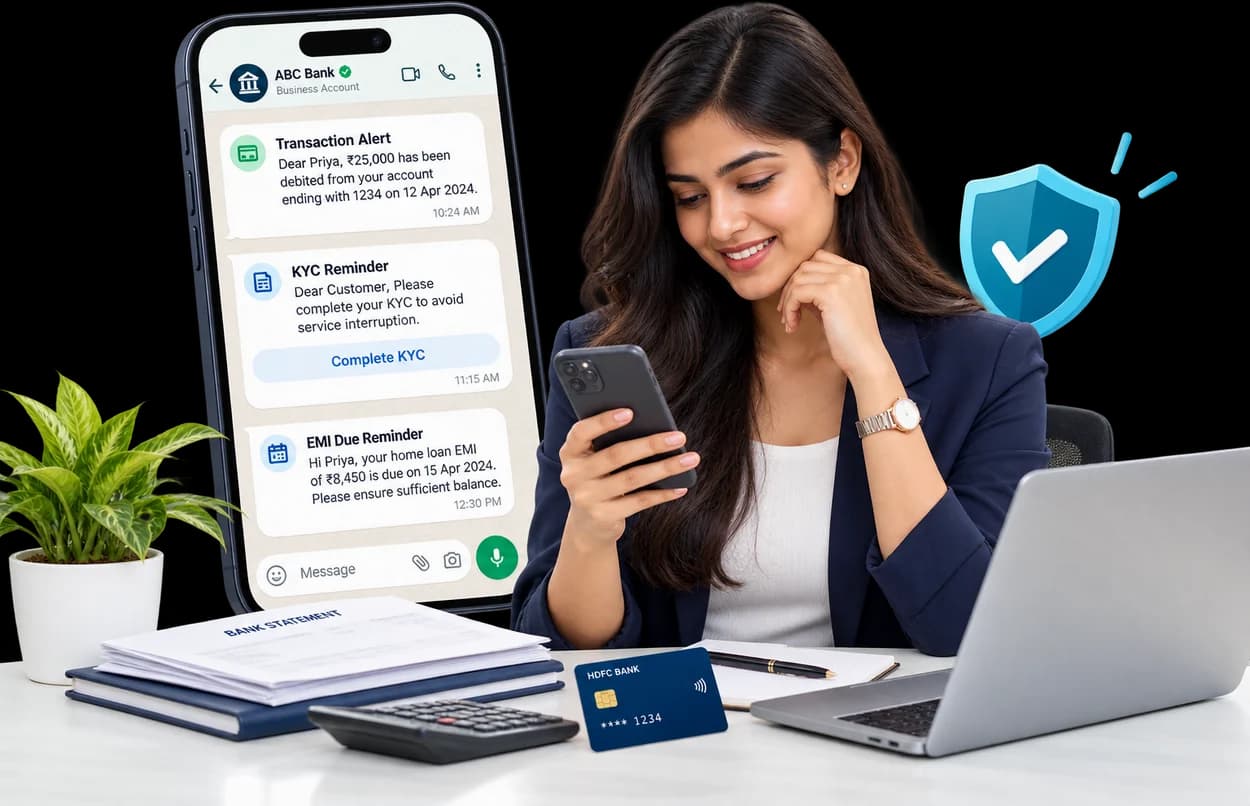
- Transaction and balance alerts
- KYC, EMI, and renewal reminders
- Statements, receipts, and policy documents
- A link to your own verified app or portal
Use the WhatsApp Business API to deliver transaction alerts, KYC nudges, EMI and premium reminders on a verified business number customers can trust — so the messages that matter are not lost among the SMS they have learned to ignore.
Critical financial alerts compete with promotional SMS for attention, so customers miss them — and the ones they do read are easy to mistake for a scam. Meanwhile KYC deadlines and EMI dates slip, and every reminder costs a call-centre seat.
Each runs as an approved utility template on your verified number, so it is cheaper than a marketing send and arrives as itself.
Debit, credit, and suspicious-activity notices delivered the moment they happen, with a clear way for the customer to flag anything they did not authorise.
Verification nudges ahead of the deadline, with the document checklist in the same thread rather than a portal the customer has to find.
Repayment and renewal reminders carrying the amount, the date, and a secure payment link, so a missed date becomes a tap instead of a call.
Statements, payment receipts, and policy documents that stay findable in the chat instead of being buried in an inbox.
Financial SMS has trained people to ignore alerts and distrust links. A Meta-verified WhatsApp Business account shows your name and green tick on every message, which gives customers a reliable way to tell your alert from a spoofed sender ID.
Verification stalls when the next step lives behind a login the customer cannot find. Send the checklist, accept the documents, and confirm completion without leaving the conversation.
Most missed EMIs are forgotten, not refused. A reminder that carries the amount, the due date, and a payment link resolves those before they reach a collections queue.
WhatsApp is encrypted in transit and your account is verified, but a channel customers trust is also a channel worth impersonating. Keep credentials off it entirely.
Messages on the WhatsApp Business API are end-to-end encrypted in transit, and the account is verified by Meta so customers see your brand name rather than an unknown sender ID. Send alerts and reminders, but never full card numbers, passwords, or OTPs.
Meta supports authentication templates for one-time passcodes, but they must be approved separately and are subject to their own pricing. Most institutions start with transaction alerts and reminders, then add authentication once volumes justify it.
A verified WhatsApp Business account shows your name and green tick, which gives customers a reliable way to tell a genuine message from a spoofed SMS sender ID. It does not prevent phishing, so alerts should still never ask for credentials.
Start with utility templates: transaction alert, KYC pending, EMI or premium due, and payment received. These are lower-cost than marketing templates and cover the messages customers expect.
14-day free trial. Go live on the official WhatsApp Business API in under a week, with help from the team that builds it.